
Uf Health At Gainesville
Retrofitting OR systems with variable air-volume valves/occupancy sensor.

Hospital Retrofit
Background:
UF Health at Gainesville, Florida - located at the University of Florida campus - is part of a larger health care network totaling more than 3 million square feet. UF Health is the most comprehensive academic health center in the southeastern United States, and includes hospitals, physician practices, colleges, centers, institutes, programs, and services across northeast and north- central Florida.
Nearly 900 UF College of Medicine and community physicians, and more than 8,000 skilled nursing and support staff provide comprehensive patient care, from primary care and family medicine to subspecialty tertiary and quaternary services for patients with highly complex medical conditions. The hospital’s affiliation with the UF Health Science Center allows patients to benefit from the latest medical knowledge and technology.
As part of an overall strategy to better manage its facilities for the purpose of patient comfort and energy management, UF Health at its Gainesville hospital retrofitted 23 operating rooms with full automation, using Phoenix Controls venturi valves linked to the existing Johnson Control BAS system.
Because of the proven success of the Phoenix Controls Theris® valves installed in this retrofit, the Florida Agency for Healthcare Administration (ACHA), Bureau of Facility Regulation, has allowed UF Health to install variable air volume valves in every OR in a new hospital tower currently under construction.
The Situation
UF Health in Gainesville had 23 operating rooms with a constant volume system of aging pneumatic valves, many of which were broken and in disrepair, all served by a single air handling unit and controlled by a Johnson Controls BAS system. Effective management by the building automation system was being hampered by a lack of accurate room-specific data and control.
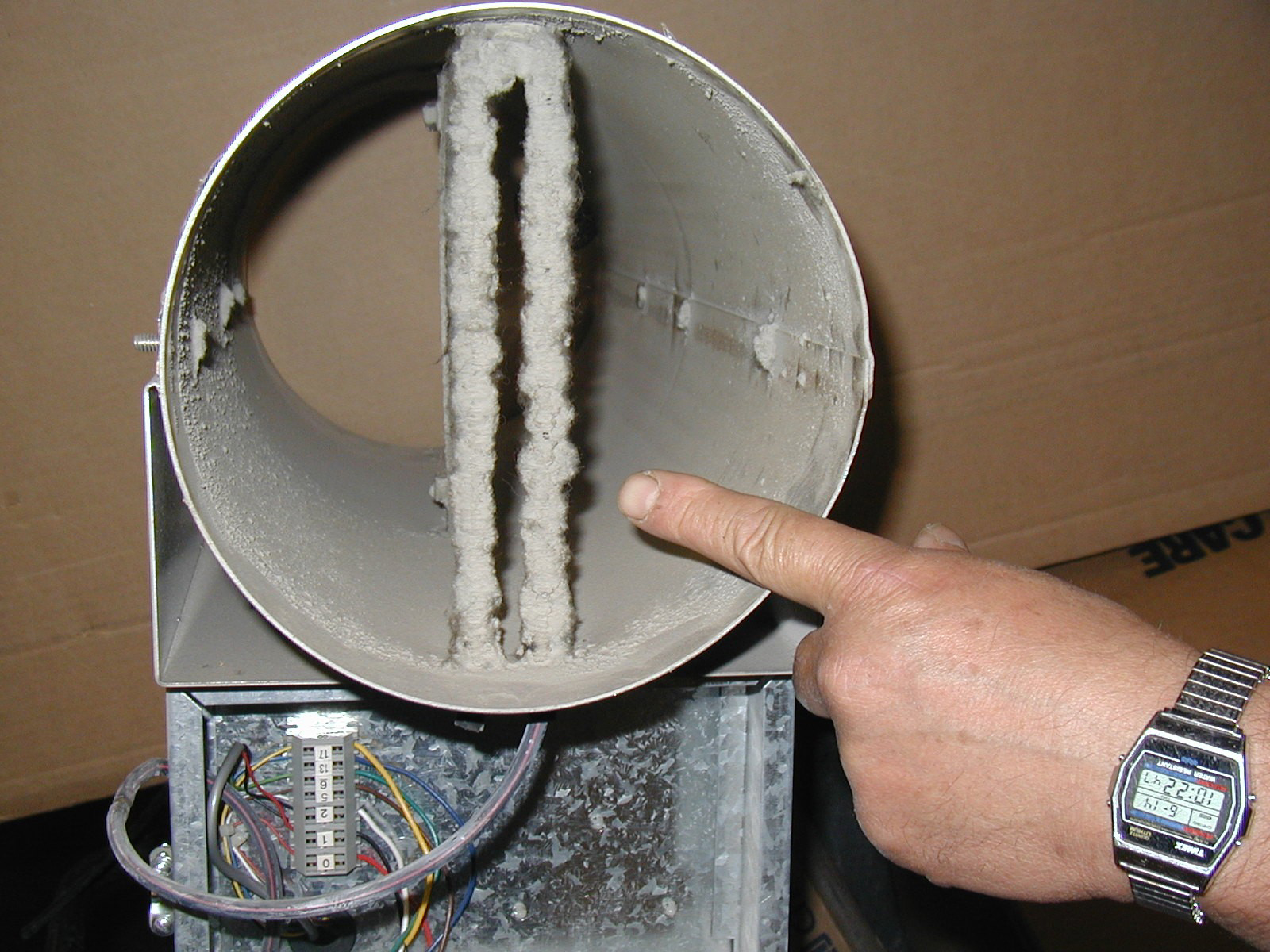
As discovered in other areas of the building (exhaust and return air terminals), accurate airflow monitoring by the building automation system was being hampered by lint buildup on the flow rings.
That kind of discrepancy is even more problematic on the exhaust or return system: if more air is being pulled out than being brought in, negative pressure in the OR is being created causing a health hazard.
The Solution
Each retrofitted OR now has a pair of variable air volume Phoenix Controls valves with an occupancy sensor. The operating rooms are set at 20 ACH in the occupied mode and turned down to the minimum flows required to maintain a .01- inch w.c. unoccupied room pressure.
“I was impressed by the accuracy of the Phoenix Controls valve shipped from the factory,” said Mark Dykes, Energy Projects Manager for UF Health. “We ordered these valves set for a certain cfm, and after installation and with minimal commissioning the Phoenix Controls factory settings proved surprisingly accurate.”
And the accuracy doesn’t fluctuate as it does with damper systems because Phoenix Controls valves don’t use dampers. The valves are characterized for their full flow range at the factory and a multi-point flow table is downloaded to the controller. Without dampers to maintain, there is the additional benefit of lowered operational cost.
“These ORs were originally designed for a minimum of 15 ACH”, explained Dykes. “Recently the hospital elected to go to the new minimum of 20 ACH due to the addition of more heat load in the room that can exist within a hospital teaching environment. The hospital also wanted to warm the room quicker for pediatric surgery, and you can’t turn the room over quicker without having the air flow.”
“There was also a clinical request to go from 62 to 80 degrees in 10 minutes,” said Dykes. “Now we know we can achieve this.”
UF Health also retrofitted the air handling unit with a 60,000 cfm, 24-fan array to replace the existing fans that were at the end of their useful life. They gained a 30 percent increase in capacity in addition to protection against catastrophic failure (as many as 4 of the 24 fans can fail, and the others will speed up to compensate).
The Result
The valve controllers on the Phoenix Controls valves feed information back into the Johnson Controls BAS system, allowing building operators to trend data— ACH, temperature, humidity, occupancy—from each operating room in real time.
The retrofit project netted a 32% energy reduction, providing an ROI in less than 3 years.
But even more significantly, the proven success of the retrofitted valves paved the way for the installation of Phoenix Controls valves in future operating rooms. All 20 ORs currently under construction in the new UF Health Cardiovascular Neurological Services hospital will contain Phoenix Controls valves.
“Because AHCA now allows us to modulate airflow using venturi valves there will be times when airflow is reduced as much as 40,000 cfm, resulting in substantial energy savings,” said Dykes. “With the prevalence of more automation being installed in hospitals today, it is exposing the weaknesses in the way we measure air flow in return and exhaust systems. This drives the need for a more resilient method of air flow control that venturi valves can fulfill where room pressure is critical - such as isolation, cath labs, ORs, etc.”