

-
-
For Buildings Automation
Go beyond building controls
For Industrial Automation
Sensing Solutions, Gas & Flame Detection.
For Process Automation & Technology
Measurement & Control, Smart Energy, and Thermal Solutions.
Expert solutions powering the future of energy.
-
Home My Account Order Management Invoice Management Case Management Saved Carts Address Book Legacy myTransactions Price Agreement Wishlist Advanced Search Preferred Business EntitymyProcess Home My Account Favorites Saved Cart Address Book Order Management Invoice Management Quote History Discount History Service ContractsMy Account My Profile My Orders My Quotes My Returns Saved Carts Invoices My Contracts Case History Work Order History My Subscriptions My Assets Manage Trainings & UsersHome Account Case Management Order Management Saved Carts Favorites Address Book Asset Management Quote ManagementCurrency:
Changing Currency will cause your current cart to be deleted. Click OK to proceed.
To Keep your current cart, click CLOSE and then save your cart before changing currency.
Currency- CHOOSE YOUR CURRENCY
Update Currency
Changing Currency will cause your current cart to be deleted. Click OK to proceed.
To Keep your current cart, click CLOSE and then save your cart before changing currency.
Select AccountSwitching accounts will update the product catalog available to you. When switching accounts, your current cart will not move to the new account you select. Your current cart will be available if you log back into this account again.
Account# Account Name City Zip/Post Code PROCEEDCANCELMy Account
-
You are browsing the product catalog for
You are viewing the overview and resources for
to view parts associated with your account
What is a Digital Twin and Why It Matters
Seeing double? That's a good thing when it comes to improving efficiency and anticipating problems in refineries.
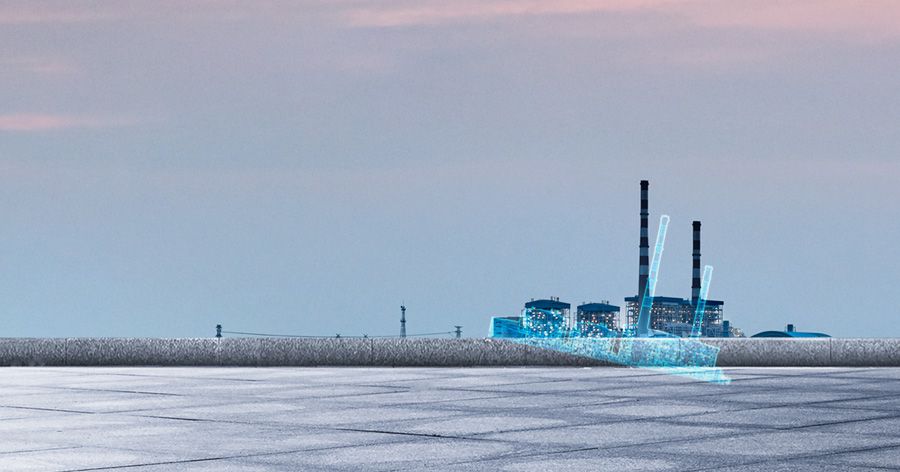
A refinery is a high stakes environment with no room for error.
Operators must learn how to run production facilities, but training on the real asset would be risky. A minor error could put workers in harm or cause downtime, costing hundreds of thousands or even millions of dollars.
So, plant operators turn to digital twins.
“A digital twin is a replication of a physical process and assets within a replicated virtual environment,” said engineer Leila Ait Ali, who has worked with operator training simulators since 2013.
The use of digital twins has become so significant today, that Gartner named it one of the top 10 high-tech trends in 2019.
Here’s how digital twins can be used:
For operational efficiency
Digital twins give visibility on the actual process against expected parameters. The difference between the actual and the expected values gives better insight into areas that are underperforming or performing incorrectly. That enables operations to make changes and achieve ideal operations.
This will lead to improved:
- Efficiency: Improved data quality and security; continuous monitoring and optimizing of plant assets
- Cost reductions: Faster operational readiness; direct and easy access to information
- Revenue growth: Faster and collaborative decision making
For training
In the same way pilots practice takeoffs and landings with a flight simulator, plant operators practice starting up and shutting down the plant with a simulator, Leila said.
“We replicate the process and the logic of the plant,” she said.
Those simulators use 3-D graphics, virtual and augmented reality and data modeling to create a digital replica.
“We make sure that when they sit in front of that simulator, it’s like they’re sitting in front of the real plant,” Leila said.
For maintenance
Digital twins can anticipate maintenance.
NASA became one of the first to formally use the digital twin concept in 2002 to assist in the operation, repair and maintenance of rockets.
Similarly, digital twin technology can be used in an oil refinery.
For example, pumps, compressors, heat exchangers and other pieces of equipment in a refinery need to be maintained.
Digital twins can utilize data collected on those pumps to predict when they would start degrading in performance.
Operators and maintenance teams know when to perform maintenance to proactively address issues before they become a problem. That helps avoid a plant shutdown and can help determine where there are “opportunities to reduce downtime, prolong maintenance intervals, and capture untapped throughput potential,” according to our case study.
“When you have data and information on equipment, it makes it easier for you to maintain it and ensure it is at its peak performance,” Leila said.
For safety
An oil refinery, power generation station or gas processing plant are high-risk locations, Leila said.
Among the risks are fires or explosions, so safety is paramount.
Using digital twins for training makes sure operators know all safety procedures. Digital twins also can anticipate potential risks and create optimal design.
Digital twins can help industrial companies drive transformation and stay competitive.
“We are working toward the best software in this area,” Leila said.
Copyright © 2026 Honeywell International Inc

Maximum File Size
Maximum Files Exceeded
Due to inactivity you will be logged out in 000 seconds.
Maximum File Size
Maximum Files Exceeded
You cannot access this page as this product is not available in your country.
Maximum File Size
Maximum Files Exceeded
This product is not available in your country.
You cannot access this page as this product is not available in your current country. To view this product, please change your product catalog view.

We use cookies and similar tracking online technologies to improve website performance, record website activities, facilitate information sharing on social media and offer advertising tailored to your interest. For more information, see our Cookie Notice and Terms and Conditions. You can also customize your browser’s cookie settings. Please note that if you refuse cookies, it may affect site functionality and performance.