

-
-
Need a Honeywell Account?
Create an AccountAlready have a Honeywell account?
Sign In -
Home My Account Order Management Invoice Management Case Management Saved Carts Address Book Legacy myTransactions Price Agreement Wishlist Advanced Search Preferred Business EntitymyProcess Home My Account Favorites Saved Cart Address Book Order Management Invoice Management Quote History Discount History Service ContractsMy Account My Profile My Orders My Orders Shop My Quotes My Returns Saved Carts Return Requests Invoices My Contracts Case History Work Order History My Subscriptions My Assets Manage Trainings & UsersHome Account Case Management Order Management Saved Carts Favorites Address Book Asset Management Quote ManagementCurrency:Localize your Content
You can set your preferred currency for this account.
Currency- CHOOSE YOUR CURRENCY
Update Currency
Changing Currency will cause your current cart to be deleted. Click OK to proceed.
To Keep your current cart, click CLOSE and then save your cart before changing currency.
Select AccountSwitching accounts will update the product catalog available to you. When switching accounts, your current cart will not move to the new account you select. Your current cart will be available if you log back into this account again.
Account# Account Name City Zip/Post Code PROCEEDCANCELMy Account
-
You are browsing the product catalog for
You are viewing the overview and resources for
to view parts associated with your account
The Future of Plastics: Reclaim, Recycle, Repeat
A new recycling process technology could help contribute to an environment with less plastic waste.

You have probably seen the recycling triangle: Reduce, reuse, recycle.
Plastic circularity is the next generation of that concept.
“The goal is to be able to use the plastic infinitely,” Carrie Eppelheimer of Honeywell Sustainable Technology Solutions said.
Today: Mechanical recycling
Current mechanical recycling technology is limited in the kinds of plastics that can be recycled. As a result, a critical solution is needed for recycling more plastic waste to avoid potential adverse long-term global impacts to ecosystems, food supply and human health.
“They’re still showing up in our waterways and rivers, and they're leaking out of landfills,” Eppelheimer said of plastics. “We have a waste plastic challenge with these lightweight materials getting into the environment in ways that we need to solve.”
Most plastic today ends up in landfill or is incinerated. Mechanical recycling processes only a fraction of current plastic waste volumes, and it usually produces lower-quality plastic.
For example, your food packaging might be transformed into lawn furniture – not back into another food package.
“You often can't get the same performance when you mechanically recycle, because you're heating that product, and that's degrading the molecular bonds,” Eppelheimer said.
That means it can’t re-enter the same sort of high-performance application.
The upgrade: Chemical recycling
Enter advanced recycling, or chemical recycling.
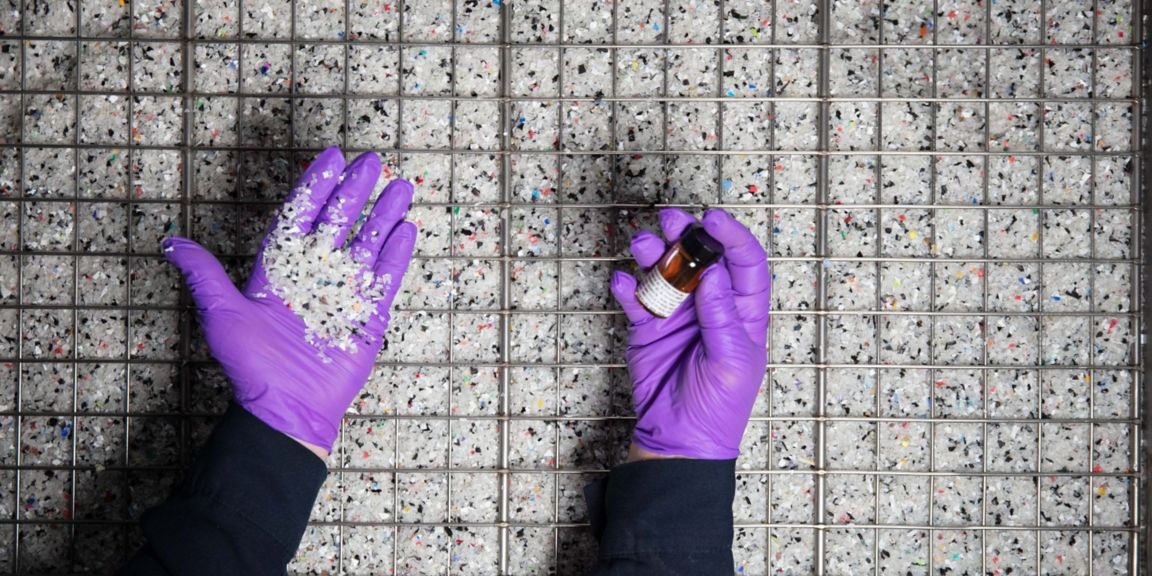
Chemical recycling takes plastic waste unsuitable for mechanical recycling and chemically breaks it down into a recycled polymer feedstock (RPF). That feedstock can then be used in the plastic production value chain to manufacture new, high-quality plastics.
“With chemical recycling complementing other methods of recycling, you can increase the amount of plastic that actually gets recycled by about three times over current levels,” Eppelheimer said.
This allows for the plastics to be used for products including, but not limited to, food packaging, pharmaceuticals and medical devices.
Reducing waste – and carbon footprint
There are many different types of plastics, including polyethylene, polypropylene and PET. They each have very different end-of-life options.
UpCycle, developed by Honeywell UOP, can reduce the carbon footprint of plastic waste handling typically by more than 50%, relative to conventional incineration and landfilling.
“So, not only are we providing a new, repeatable route to keep plastic waste out of the environment and return it back to useful plastics – we’re also helping lower the global warming footprint of these valuable materials,” Eppelheimer said.
Copyright © 2026 Honeywell International Inc

Maximum File Size
Maximum Files Exceeded
Due to inactivity you will be logged out in 000 seconds.
Maximum File Size
Maximum Files Exceeded
You cannot access this page as this product is not available in your country.
Maximum File Size
Maximum Files Exceeded
This product is not available in your country.
You cannot access this page as this product is not available in your current country. To view this product, please change your product catalog view.

We use cookies and similar tracking online technologies to improve website performance, record website activities, facilitate information sharing on social media and offer advertising tailored to your interest. For more information, see our Cookie Notice and Terms and Conditions. You can also customize your browser’s cookie settings. Please note that if you refuse cookies, it may affect site functionality and performance.