

-
-
Need a Honeywell Account?
Create an AccountAlready have a Honeywell account?
Sign In -
Home My Account Order Management Invoice Management Case Management Saved Carts Address Book Legacy myTransactions Price Agreement Wishlist Advanced Search Preferred Business EntitymyProcess Home My Account Favorites Saved Cart Address Book Order Management Invoice Management Quote History Discount History Service ContractsMy Account My Profile My Orders My Orders Shop My Quotes My Returns Saved Carts Return Requests Invoices My Contracts Case History Work Order History My Subscriptions My Assets Manage Trainings & UsersHome Account Case Management Order Management Saved Carts Favorites Address Book Asset Management Quote ManagementCurrency:Localize your Content
You can set your preferred currency for this account.
Currency- CHOOSE YOUR CURRENCY
Update Currency
Changing Currency will cause your current cart to be deleted. Click OK to proceed.
To Keep your current cart, click CLOSE and then save your cart before changing currency.
Select AccountSwitching accounts will update the product catalog available to you. When switching accounts, your current cart will not move to the new account you select. Your current cart will be available if you log back into this account again.
Account# Account Name City Zip/Post Code PROCEEDCANCELMy Account
-
You are browsing the product catalog for
You are viewing the overview and resources for
to view parts associated with your account
How Businesses Can Cut Methane Emissions
Technology that helps monitor methane leaks will be key for the fight against climate change
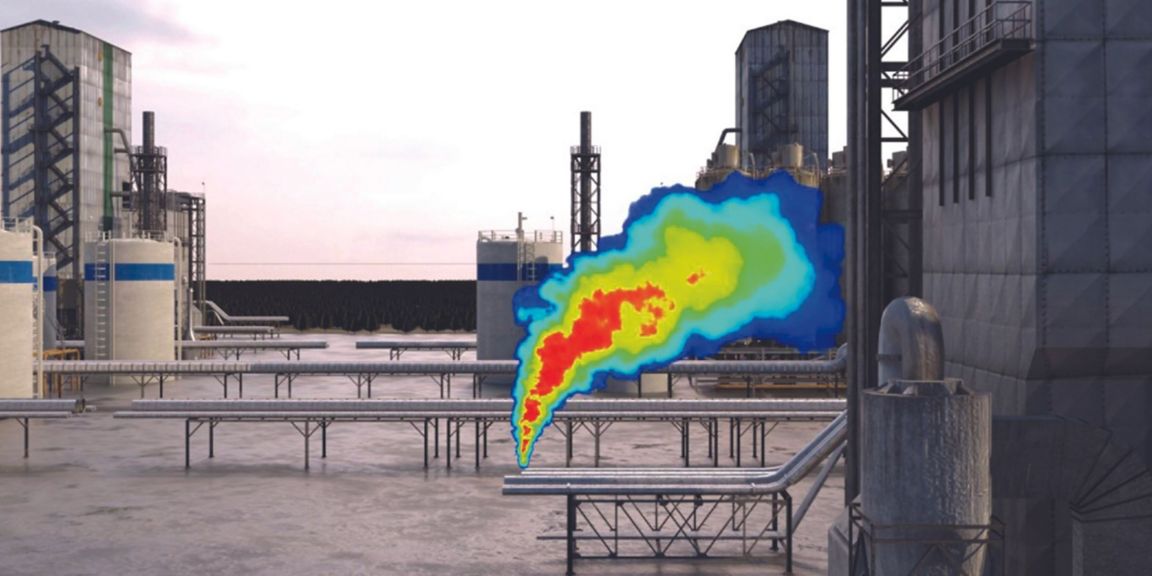
Methane emissions have taken center stage in conversations around the climate crisis.
As part of the UN Climate Change Conference (COP26), more than 100 countries signed the Global Methane Pledge, an agreement to work toward cutting methane emissions 30% by 2030 compared to 2020 levels.
Methane, a greenhouse gas, is the main component of natural gas, which fuels industrial plants, powers homes and runs air conditioners, among other applications. The largest source of methane emissions is agriculture, followed by energy and industrial operations and waste from homes and businesses, according to the US Environmental Protection Agency.
Methane emissions are a cause for concern, as brought to light in the 2021 report from the UN Intergovernmental Panel on Climate Change. Over a 20-year period, methane is about 80 times more powerful at warming the atmosphere than carbon dioxide, according to the UN Environment Programme.
Increasingly, experts have begun focusing efforts to cut methane emissions, and technology that exists today can help oil and gas corporations detect and stop methane leaks more efficiently than in the past.
How can technology help?
Robert Kester, president of Honeywell Rebellion, which produces Gas Cloud Imaging (GCI) technology that helps monitor and quantify toxic gas leaks, said that historically, at sites like pipelines, power plants and refineries, it’s common for corporations to use manual methods to monitor methane leaks.
These manual methods typically involve sending people to detect natural gas leaks when they occur, using handheld equipment to conduct inspections.
Technology can detect natural gas leaks more efficiently than these manual techniques, Kester said.
One solution that’s being used today is video with infrared hyperspectral capabilities – technology that can detect invisible gasses like methane – which monitor for leaks 24/7 and indicate the biggest leaks that need to be addressed immediately, Kester said.
Continuous monitoring for methane leaks can help corporations be better positioned to meet their sustainability goals, as well as prevent them from wasting resources, Kester said.
“By doing the right thing today, companies with methane-intensive operations can help the environment in the future while meeting their business goals,” Kester said.
What’s next? In the future, methane monitoring technologies could involve automation.
“Instead of having people walking around looking for leaks, the solution could look like deploying a camera at sites that will send a video of a leak to an authorized person’s phone, prompting them to address the leak,” he said.
Copyright © 2026 Honeywell International Inc

Maximum File Size
Maximum Files Exceeded
Due to inactivity you will be logged out in 000 seconds.
Maximum File Size
Maximum Files Exceeded
You cannot access this page as this product is not available in your country.
Maximum File Size
Maximum Files Exceeded
This product is not available in your country.
You cannot access this page as this product is not available in your current country. To view this product, please change your product catalog view.

We use cookies and similar tracking online technologies to improve website performance, record website activities, facilitate information sharing on social media and offer advertising tailored to your interest. For more information, see our Cookie Notice and Terms and Conditions. You can also customize your browser’s cookie settings. Please note that if you refuse cookies, it may affect site functionality and performance.