

-
-
Need a Honeywell Account?
Create an AccountAlready have a Honeywell account?
Sign In -
Home My Account Order Management Invoice Management Case Management Saved Carts Address Book Legacy myTransactions Price Agreement Wishlist Advanced Search Preferred Business EntitymyProcess Home My Account Favorites Saved Cart Address Book Order Management Invoice Management Quote History Discount History Service ContractsMy Account My Profile My Orders My Orders Shop My Quotes My Returns Saved Carts Return Requests Invoices My Contracts Case History Work Order History My Subscriptions My Assets Manage Trainings & UsersHome Account Case Management Order Management Saved Carts Favorites Address Book Asset Management Quote ManagementCurrency:Localize your Content
You can set your preferred currency for this account.
Currency- CHOOSE YOUR CURRENCY
Update Currency
Changing Currency will cause your current cart to be deleted. Click OK to proceed.
To Keep your current cart, click CLOSE and then save your cart before changing currency.
Select AccountSwitching accounts will update the product catalog available to you. When switching accounts, your current cart will not move to the new account you select. Your current cart will be available if you log back into this account again.
Account# Account Name City Zip/Post Code PROCEEDCANCELMy Account
-
You are browsing the product catalog for
You are viewing the overview and resources for
to view parts associated with your account
How Space Will Protect Us From Hackers
To secure data, it’s time to look to the stars— Quantum physics, lasers and satellites will make it possible
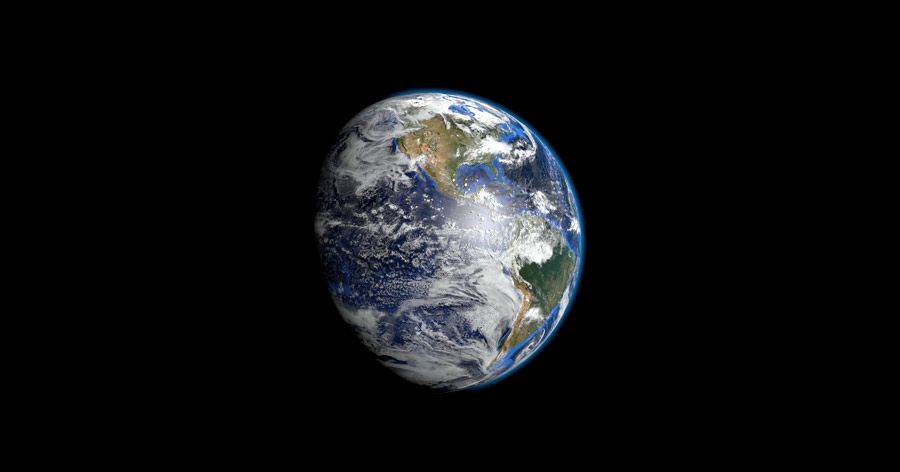
The future of cybersecurity will depend on space.
The key that unlocks confidential information will be sent far away, to satellites orbiting the earth.
Those satellites – plus quantum physics – will help make sure data that is encrypted can’t be accessed by hackers.
“The world is awash with many varieties of privileged and confidential information, which we would like to remain so,” said Hugh Podmore, a Honeywell physicist who models and designs optical systems for space applications.
Demand for secure channels is growing among governments, businesses and individuals.
Current methods for safe communication rely on distribution of encryption keys, which may be vulnerable to interception, opening the door for bad actors to access private data.
“Encryption is important because it’s critical to have some way of having secure communication between two parties,” Hugh said. “It’s fundamental to the idea of having privacy that you should have a way to communicate with someone without the fear that communication will be intercepted.”
Using quantum physics, it is possible to secure those communications through a process called Quantum Key Distribution, (QKD) which has been implemented on some ground-based fiber networks.
But those networks are only secure for about 200 kilometers, Hugh said. That poses a challenge for people that are greater distances apart and need to send privileged information.
So scientists have turned to using satellites for QKD to allow secure communication backed by quantum physics on a global scale.
Here’s how that will work:
When two parties want to communicate through a secure channel, they need to make sure a third party cannot access the sensitive information.
To make sure communications are secure, the two parties use an encryption key: A long password shared between the two parties. Data is scrambled so that only those with that encryption key can unscramble and access the information.
During Quantum Key Distribution, the encryption key is transmitted using photons, which are similar to single particles of light, and are prepared on the ground in a quantum state.
A telescope sends those photons, which carry the encryption key, up to a satellite orbiting the Earth. The satellite measures these photons, randomly, in one of two channels, and the ground station and satellite communicate publicly to reconcile which channel was measured at which time. Once the satellite and the ground station know when and how photons were measured, both will have a shared set of measurements that may form an encryption key.
The process is secure, because the satellite can detect interference by looking for correlations in the photons it has received. If a bad actor has been trying to intercept the key, then the correlation of the photons will be affected, and the satellite will know that the key is not secure.
Since it’s unlikely hackers will break quantum physics, the process guarantees a secure transmission.
The downside is the process is susceptible to less nefarious interferences, like the weather.
Still, because it’s evident when the quality of the transmission is compromised in any way, it allows scientists to know when the encryption key is perfectly secure.
“We can say with fundamental levels of certainty that the key has not been intercepted,” Hugh said.
In 2017, a QKD mission enabled “an unhackable video conference” in 2017, according to the Chinese Academy of Sciences.
Today, Honeywell is in the process of conducting a QKD mission – called QEYSSat – for the Canadian government, leading the drive towards secure global communications backed by QKD.
The current need for those secure channels is driven by governments and especially by national agencies who may have stricter requirements on the sensitivity on their data, Hugh said.
But the wider advantage of QKD is that it future-proofs you against the development of quantum computers, Hugh said. Those computers could break the encryption methods on which we rely today, rendering even our most sensitive data vulnerable to attack.
By implementing QKD, especially on a global scale using satellites, we can ensure that the privacy and security that we enjoy today, will continue and even improve.
Learn more about how to protect yourself and your business from cyberattacks.
Copyright © 2026 Honeywell International Inc

Maximum File Size
Maximum Files Exceeded
Due to inactivity you will be logged out in 000 seconds.
Maximum File Size
Maximum Files Exceeded
You cannot access this page as this product is not available in your country.
Maximum File Size
Maximum Files Exceeded
This product is not available in your country.
You cannot access this page as this product is not available in your current country. To view this product, please change your product catalog view.

We use cookies and similar tracking online technologies to improve website performance, record website activities, facilitate information sharing on social media and offer advertising tailored to your interest. For more information, see our Cookie Notice and Terms and Conditions. You can also customize your browser’s cookie settings. Please note that if you refuse cookies, it may affect site functionality and performance.