

-
-
Need a Honeywell Account?
Create an AccountAlready have a Honeywell account?
Sign In -
Home My Account Order Management Invoice Management Case Management Saved Carts Address Book Legacy myTransactions Price Agreement Wishlist Advanced Search Preferred Business EntitymyProcess Home My Account Favorites Saved Cart Address Book Order Management Invoice Management Quote History Discount History Service ContractsMy Account My Profile My Orders My Orders Shop My Quotes My Returns Saved Carts Return Requests Invoices My Contracts Case History Work Order History My Subscriptions My Assets Manage Trainings & UsersHome Account Case Management Order Management Saved Carts Favorites Address Book Asset Management Quote ManagementCurrency:Localize your Content
You can set your preferred currency for this account.
Currency- CHOOSE YOUR CURRENCY
Update Currency
Changing Currency will cause your current cart to be deleted. Click OK to proceed.
To Keep your current cart, click CLOSE and then save your cart before changing currency.
Select AccountSwitching accounts will update the product catalog available to you. When switching accounts, your current cart will not move to the new account you select. Your current cart will be available if you log back into this account again.
Account# Account Name City Zip/Post Code PROCEEDCANCELMy Account
-
You are browsing the product catalog for
You are viewing the overview and resources for
to view parts associated with your account
Get a Better Look at Methane Leaks
Technology is allowing businesses to pinpoint leaks of invisible, odorless gasses -- including the harmful greenhouse gas methane, which is warming the atmosphere faster than carbon dioxide.
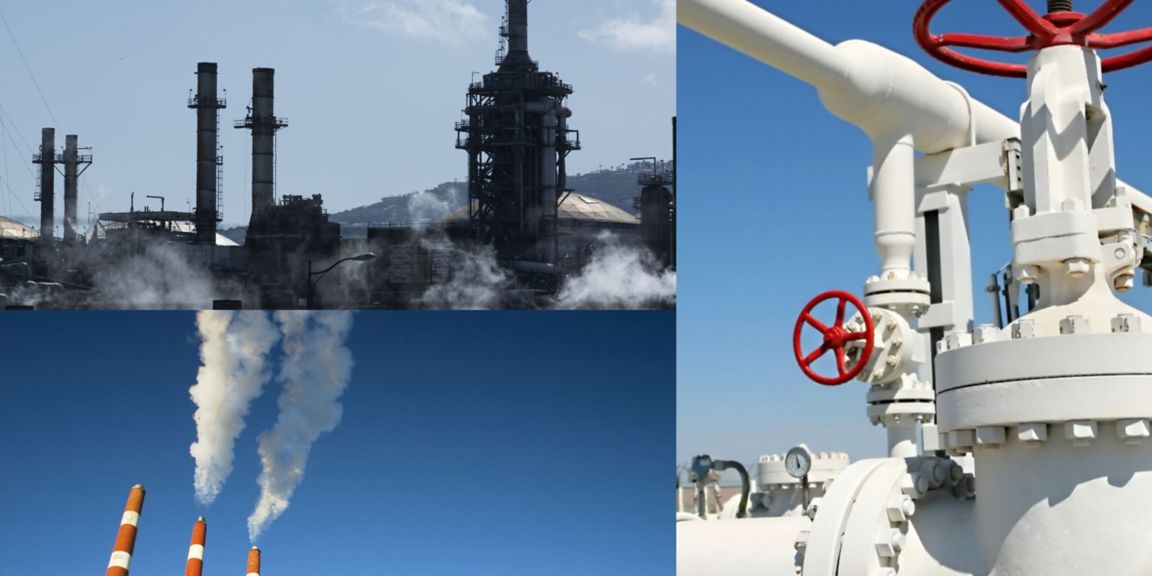
Methane is the main component in the natural gas we use to fuel our industrial plants, heat and cool our buildings, and cook our dinners.
Unfortunately, it’s also a potent greenhouse gas that contributes to climate change, according to the U.S. Environmental Protection Agency. Information from the U.N. Environment Programme cites methane as being about 80 times more powerful at warming the atmosphere than carbon dioxide over a 20-year period.
Composed of carbon and hydrogen, the colorless, odorless and highly flammable gas enters the atmosphere through human-related activities such as agriculture, oil and gas production, coal mining, solid-waste management, and wastewater management, as well as natural sources. Long viewed as an unavoidable byproduct of these activities, methane is now also seen as an environmentally dangerous emission that must be curbed to slow global warming.
Today, technology is available to help organizations more easily identify sources of methane emissions from industrial processes and reduce the impact they have on global warming.
Targeting an invisible adversary
As a major industrial source of methane emissions, companies in the oil and gas industry are holding themselves accountable to targets for reducing the amount of methane they leak into the atmosphere. Locating leaks is a key obstacle. Because methane is an invisible gas, leaks can be very hard — even dangerous — to accurately detect and address.
Traditional methods of methane monitoring rely on manual inspections of industrial equipment. Workers use handheld thermal cameras to examine equipment during periodic inspections. But an inspection is only a snapshot in time. Although effective in the moment, periodic checks offer no guarantee that leaks won’t occur between scheduled inspections.
“You also have to consider the size, complexity and remoteness of some of these facilities,” said Robert Kester, president of Honeywell Rebellion. “Navigating thousands of pipes running through refinery superstructure to look for potential leaks is hard work — and incredibly inefficient.”
'Turning the lights on'
The best way to ensure leaks are located and eliminated is continuous methane monitoring. Today there are new technologies for detecting methane leaks that can provide 24/7 monitoring of site operations, immediately alerting workers to detected leaks while reducing risk of exposure.
Gas cloud imaging systems make the invisible visible, enabling the oil and gas, petrochemical, power and other industries to pinpoint the source of a gas leak and measure its volume and concentration in real time. Using hyperspectral gas imaging technology, operators can view multicolor images that depict varying densities of gas throughout an industrial site, much like how weather radar systems show the intensity of rain across a region.
“This technology uses a relatively simple pole-mounted camera at customer sites to detect methane leaks and clearly show workers the location and size of a leak, as well as the direction of the plume, on a video monitor,” Kester said. “One customer said it’s like turning the lights on at their site.”
Protecting the planet
Methane remains a major contributor to global warming, but the global community is working hard to reduce its impact. Around the world, governments, nongovernmental organizations and industry are working together to develop strategies that target methane. These efforts inspire programs such as the fast mitigation sprint initiative announced at COP27, which aims to slow the pace of global warming in the near term.
Breakthrough tools like Honeywell gas cloud imaging technology can help the global oil and gas industry do its part by monitoring methane emissions and detecting leaks more quickly, easily and effectively, supporting its important and ambitious goal of controlling its impact on climate change.
Learn more about why methane poses a big risk to the environment.
Copyright © 2026 Honeywell International Inc

Maximum File Size
Maximum Files Exceeded
Due to inactivity you will be logged out in 000 seconds.
Maximum File Size
Maximum Files Exceeded
You cannot access this page as this product is not available in your country.
Maximum File Size
Maximum Files Exceeded
This product is not available in your country.
You cannot access this page as this product is not available in your current country. To view this product, please change your product catalog view.

We use cookies and similar tracking online technologies to improve website performance, record website activities, facilitate information sharing on social media and offer advertising tailored to your interest. For more information, see our Cookie Notice and Terms and Conditions. You can also customize your browser’s cookie settings. Please note that if you refuse cookies, it may affect site functionality and performance.