
7 Areas of Sustainable Innovation to Know – and Their Projected Impact by 2030
We estimate that Honeywell technologies will have a cumulative impact of mitigating 2 billion metric tons of CO2e between 2023 and 2030. Here’s what that could look like.
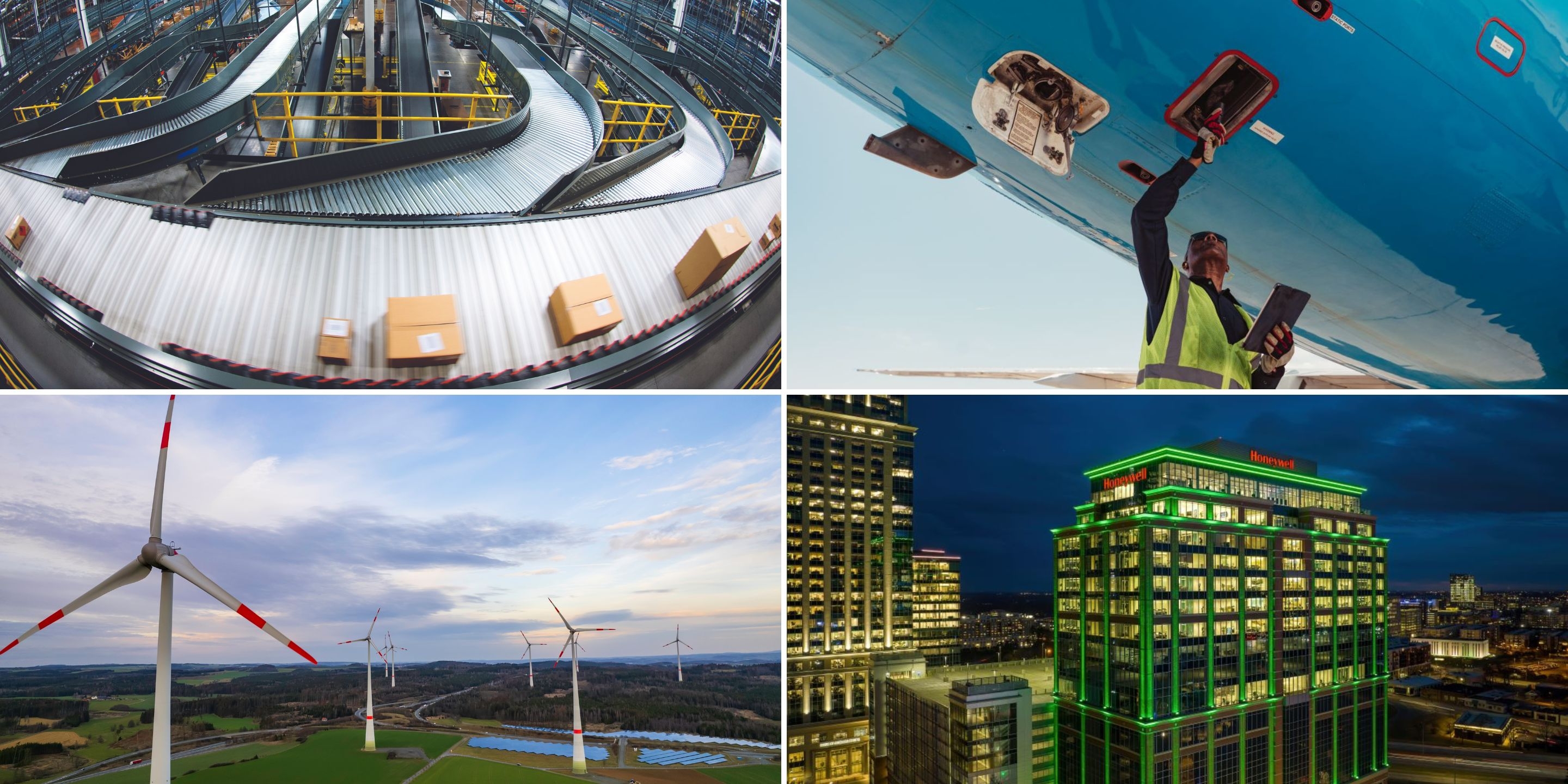
Cameras that detect invisible gas leaks.
The science of converting waste fats, oils and greases into sustainable aviation fuel (SAF).
Software that senses a building’s occupancy and adjusts energy usage accordingly.
These are just a few examples of Honeywell’s technologies used in the world today to help industries be safer, smarter and more sustainable. What could their collective impact look like?
“We estimate that Honeywell technologies will have a cumulative impact of mitigating 2 billion metric tons of CO2e between 2023 and 2030,” said Dr. Gavin Towler, Honeywell’s Corporate Vice President, Chief Scientist for Sustainability and Chief Sustainability Officer.
Learn more about the sustainability solutions contributing to this projected impact.
What to Know: Innovations including methane detectors, software and gas-cloud imaging cameras are enabling businesses to continuously monitor for and pinpoint leaks of invisible, odorless gasses – including the greenhouse gas methane, which is warming the atmosphere faster than carbon dioxide.
Estimated Impact: We estimate that Honeywell technologies for methane emissions detection and flare monitoring will have a cumulative impact of mitigating 140 million metric tons of CO2e between 2023 and 2030.1
What to Know: Enabling aircraft to use less fuel and developing new ways to produce renewable fuels are critical solutions for the aviation industry’s biggest challenges. Honeywell’s flight management software helps crews take more efficient flight routes to conserve fuel, and when demonstrated in a customer test flight, it saved 16% of aviation emissions.1 Our teams have also developed process technologies that enable the conversion of widely available sources (or feedstocks), such as used fats, oils and greases, and other waste, into renewable fuels.
Read more about Honeywell’s renewable fuels milestones so far.
Estimated Impact: We estimate that Honeywell technologies for sustainable aviation will have a cumulative impact of mitigating 270 million metric tons of CO2e between 2023 and 2030.1
What to Know: Honeywell’s products, software and services have been deployed in more than 10 million buildings worldwide.1 Sustainable building technologies include building management systems, energy and power management software and building energy efficiency projects that are designed to help buildings operate more efficiently while optimizing the occupant experience.
Estimated Impact: We estimate that Honeywell technologies for sustainable buildings will have a cumulative impact of mitigating 420 million metric tons of CO2e between 2023 and 2030.1
What to Know: Carbon capture, utilization and sequestration is a process that captures carbon dioxide (CO2) emissions from sources like power plants and industrial processes, preventing CO2 from entering the atmosphere.
Learn more about how carbon capture works in this podcast featuring our expert Mei Chia.
Estimated Impact: We estimate that Honeywell technologies for carbon capture and utilization or sequestration (CCUS) will have a cumulative impact of mitigating 320 million metric tons of CO2e between 2023 and 2030.1
What to Know: Honeywell industrial automation technologies are used for automatic control of plants in the chemical process industries, fuels production, pharmaceuticals, food and beverages, pulp and paper, mining and metals production, discrete manufacture and warehouse automation.
Estimated Impact: We estimate that Honeywell technologies for industrial automation will have a cumulative impact of mitigating 200 million metric tons of CO2e between now and 2030.1
What to Know: Honeywell industrial automation technologies are used for automatic control of plants in the chemical process industries, fuels production, pharmaceuticals, food and beverages, pulp and paper, mining and metals production, discrete manufacture and warehouse automation.
Estimated Impact: We estimate that Honeywell technologies for industrial automation will have a cumulative impact of mitigating 200 million metric tons of CO2e between 2023 and 2030.1
What to Know: Hydrogen combustion is the process of burning hydrogen to produce energy. When hydrogen produced with renewable energy is burned, it emits only water vapor as a byproduct, making it an efficient energy source that can significantly reduce greenhouse gas emissions. One example is Honeywell’s hydrogen fuel cell systems, which are available today to power unmanned aerial vehicles – think drones – to help them fly longer and quieter than drones powered by batteries or gasoline engines.
Estimated Impact: We estimate that Honeywell technologies for hydrogen combustion will have a cumulative impact of mitigating 50 million metric tons of CO2e between 2023 and 2030.1
1Methodology for estimating GHG mitigation impact is available at investor.honeywell.com (see “ESG/ESG Information/GHG Mitigation Impact of Honeywell Technologies”)