
University Of California Irvine
Smart Labs Energy Savings
Background:
The University of California campus in Irvine, CA (UCI) is one of 10 general campuses in the University of California system. A public research university, it serves more than 30,000 students, nearly 3,000 faculty, and about 5,000 staff on the main campus. UCI is ranked ninth among the best public universities in the United States and has twice been ranked as the nation’s No.1 “greenest” campus by Sierra magazine.
The campus set its sights on cutting energy consumption in laboratory building systems by 50 percent with a comprehensive energy conservation strategy called the Smart Labs Initiative in which Phoenix Controls plays a crucial role.
The Situation
Between 1990 and 2010, the fast-growing campus added 13 new laboratory buildings - which inevitably boosted UCI’s energy consumption.
In 2007, UCI’s vice chancellor of administrative and business services established the goal of reducing energy use in laboratory buildings by 50 percent. Considering that a more typical target at the time was 20-30 percent, this was an aggressive goal. Laboratory buildings with their complex systems and 24/7 operation consumed two-thirds of the utilities on campus, so they were the obvious place to concentrate.
The Solution
With everything on the table—lighting, air, filtration, pressurization, reheating, preheating (a minor issue in Southern California), cooling, and exhaust— air changes per hour (ACH), the biggest energy drain, was the top priority. At the time, the lowest rate on campus was 6 ACH, and the average was 8-10 ACH.
UCI turned to Phoenix Controls to implement a demand-control ventilation system in conjunction with an Aircuity monitoring system to bring that average down to 2 ACH in unoccupied spaces and 4 ACH while occupied. UCI’s energy team was committed to achieving this goal without compromising safety.
“The first time we presented what we were doing, people said we were crazy,” says Matthew Gudorf, UCI’s campus energy manager. “We were breaking the developed norm.”
The focus was on system turndown ratios, accuracy at low flows, speed of response, and system stability. The Aircuity sensors monitor the quality of air in a lab space compared to the outside and supply air every 15 minutes. The system sends a signal to the Phoenix Controls valves and adjusts the airflow and air changes per hour accordingly. If there are no contaminants in the air, there is no need to change it as often. If contaminants are detected, the Phoenix Controls valves are able to respond immediately to ramp up the air changes and purge the room.
Phoenix Controls valves have been key to the success and execution of the Smart Lab Initiative, providing a very high turndown range and impressively consistent accuracy at low flows. Phoenix Controls valves are also ideal for retrofits where ceiling space is at a premium.
Phoenix Controls valves are 26-30 inches long. Other devices require up to 10 duct diameters for proper airflow measurement and control, meaning a 12-inch duct requires 10 feet of duct work. With mechanical pressure independence and inlet/outlet insensitivity, limited duct work length is not an issue for Phoenix Controls valves. UCI had been using Phoenix Controls valves long before they implemented the Smart Labs Initiative or installed an Aircuity system. When Smart Labs got underway, the University drafted a list of prerequisites, including digital controls and variable air volume.
“We want our labs to be dynamic,” Gudorf says. “We needed that speed of response: How fast does the system respond if I raise a sash? Will it remain negative to the corridor? We wanted a proven product, and we’ve had a lot of success in the past with Phoenix valves. We specified lab air controls that meet certain criteria, and Phoenix has won, I believe, all of the bids to date. The product has served us very, very well.”
UCI installed a total Phoenix Controls system— including room temperature controls with high-speed valves on both supply and general exhaust. For the fume hoods, the system incorporated high-speed exhaust valves with zone presence sensors and fume hood monitors. The digital control data from the Phoenix Controls system was fully integrated locally at the lab level with Aircuity in order monitor the effectiveness of the UCI Smart Labs program.
The Result
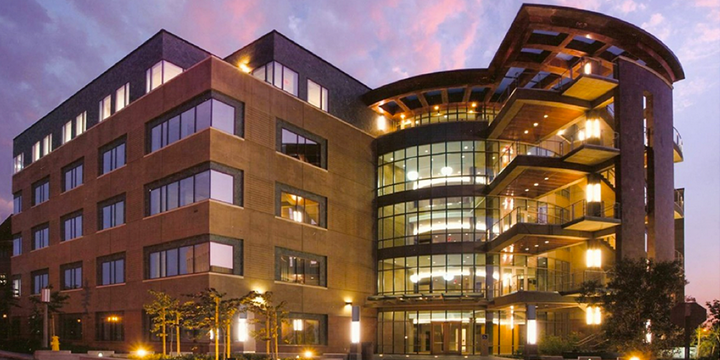
UCI included two nearly identical buildings in the Smart Labs program: Hewitt Research Hall, completed in 2003, and the Sue and Bill Gross Stem Cell Research Center, completed in 2010.

The Stem Cell Research Center is similar to Hewitt Research Hall but with one additional floor. Smart Labs features were piloted in the Stem Cell Research Center, where energy savings compared to code exceed 50 percent and may approach 55 percent - an energy savings equivalent to taking 130 automobiles off the road for 20 years. Cutting back to 2 or 4 ACH had the added benefit of virtually eliminating reheat.
A comparison of the two buildings showed that Hewitt Research Hall, which averaged 8.7 ACH, used roughly 1 watt per sf more in HVAC than the Sue and Bill Gross Stem Cell Research Center, and 0.5 watts per sf in lighting, which inspired the campus to develop a package of retrofits for Hewitt. The end result was 58 percent savings in kilowatt hours, a thermal savings of 77 percent, and an overall savings of 62 percent.
That package has since been used to retrofit a dozen other laboratories, with an average return on investment of 6-8 years. Combined kWh and thermal data for 10 of the retrofitted buildings show a total energy savings over 60 percent.

There are currently approximately 3,500 Phoenix valves at work on the UCI campus.
